Facebook Isn't The Problem

Excellent thoughts from Michael Whitworth on the social media firestorm over the last week:

What if Facebook became a global platform where Christ was glorified in all things?

If only people had the common sense to represent themselves in a Christian manner not just on Sundays but every day and everywhere, including Facebook.

As A Minister: Why You Should Care About What Apple Said This Week

Monday in San Francisco, Apple kicked off WWDC, their Worldwide Developers Conference. As a minister, why should you care about such things? I'll give you few reasons why. 

The iPad is Changing. There may be some new products on the horizon, i.e. the rumored 12-inch iPad Pro, but even without that announcement yesterday (Apple has since stopped making major product announcements at WWDC and stuck to developer stuff), the iPad is changing. 

There was some stuff demoed that we will see with iOS 9 in the Fall that is amazing - it's what the iPad should have been all along. If you're a minister and you use the iPad on a daily basis, you're going to be impressed with what Apple is doing. 

Two of the biggest things on the iPad - working with text and multitasking - have been completely redone. Now you can have two apps running side-by-side in tandem and resize the windows. This isn't a revolutionary thing - Samsung has been doing it with tablets and even phones for a while now - but it's wonderful to have on the iPad. Now you can have two Bible apps open at the same time, or an internet site open in Safari on the left and a writing app on the right. Pretty sweet stuff. 

The other is text selection. We preachers live in text. At least I do. And Apple has designed an intuitive form of text selection that nearly looks like a trackpad. You can depress two fingers on the keyboard and zip around to highlight text and move your cursor. Very cool. Much faster than dragging your finger in just the right spot and getting frustrated when it goes below the line you wanted it to. 

The Mac isn't changing. I say that because Yosemite was a complete redesign of OSX, and yes, it has more bugs than an abandoned hotel. But this release, named OSX El Capitan (named for a rock face in Yosemite National Park...Leopard > Snow Leopard, Lion > Mountain Lion, Yosemite > El Capitan). El Capitan is focusing on performance and stablity, so in effect, Apple is slowing down the on new features in order to make the current ones work much better. 

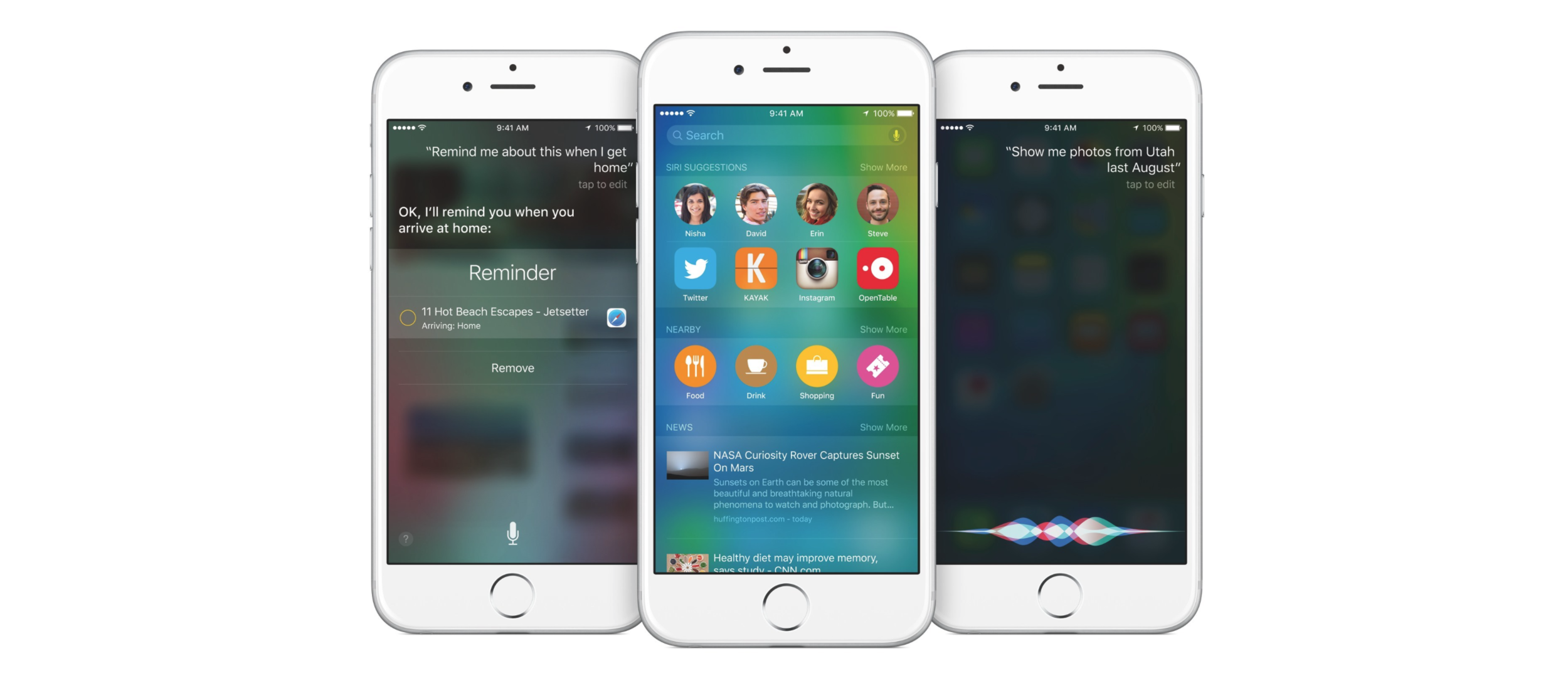
Search on iOS is getting better. Universal search on iOS is going to be much better thanks to deeper integration. What does this mean? It means you can find more stuff that you need quicker. Siri will be lots more useful, a la Google Now on Android devices. Siri is more intelligent too - you can say "Show me photos from Florida last October" and it can fetch those photos, provided you have them synced in the new Photos app. 

The new Notes app. 

The new Notes app. 

Notes I can now finally recommend. The built-in Notes is an app that lots of ministers I know use a lot just to jot down things they come across. Notes wasn't very functional or useful in my opinio. You couldn't style text or insert pictures. Now you can. Not only that, the app has been redesigned for all platforms - iPhone, iPad, and the Mac. And it syncs via iCloud so you don't have to worry about it. I still think there are better note-taking apps for your phone and tablet - Drafts, Editorial, and Simplenote to name a few - but Apple is really making strides with the app that 75% of their users use because it's just there

This was only a few things that Apple announced of many, but these things will continue to improve my experience on iOS and the Mac and I know as ministers it will benefit you as well. 

Spark by Readdle Wins the Battle for iOS Email

Let's just face it: email stinks. But Spark by Readdle hopes to make you like your email again. 

Ever since Apple opened up iOS a few years ago to include third-party email clients, there have been no shortage of good and sometimes great email apps. Mailbox was pretty great and promised to help you blaze through your email. Dispatch offered nerd and customization options and hoped to triage your email. Entirely new email services like Google Inbox took a slightly different approach to email - categorizing by type and offering a super-simplified interface. Other email clients such as Cloudmagic offered to help you manage many email accounts easily while offering an outstanding UI. 

Spark by Readdle offers all that, and more. 

This is not Readdle's first rodeo into productivity on iOS, not by a long shot. Readdle is one of the first (if not the first) with productivity apps for iOS. They were making productivity apps for iOS before it was even called iOS. They have an impressive catalog of apps that help you manage notes, documents and calendars. In fact, if you follow me you'll know that Calendars 5 has been my default calendar app of choice for over a year now on iOS. 

So when Merlin Mann began talking about "an impressive email app by Readdle" in some of his recent podcasts, I immediately contacted Readdle PR to see if I could get a sneak peek. And to my pleasant surprise, they obliged. 

I've only had a few extra days with Spark, now publicly available as of this morning, but it is a truly great iOS email app. Here's some reasons why. 

Swipe to delete, snooze, and pin for quick email triage. If you do email of any kind, you probably get a lot of stuff you don't want and just a few things a day that you do. Spark doesn't vary much from other clients like Cloudmagic, Inbox, or Mailbox in that it lets you swipe quickly to get through your email in a flash. Other mail clients offer this, sure, but Spark has implemented lessons learned from other apps very well. 

Most important stuff at the top. New emails, emails you've deemed important by pinning them stay at the top until you move them. Read emails automatically go to another section once you've tapped out of them. 

Multiple inbox support is wonderful. Managing multiple email accounts, even getting them to display inline in your inbox is no problem for Spark. Adding new accounts is easy, and you can set individual settings and notifications for each account. 

Nicely formatted message threads. Hate getting those emails back and forth from the same person and seeing all that nasty formatting? Me too. That's a thing of the past with Spark. The app is very innovative by cleaning up all the junk and letting you see your message thread in a nicely formatted way. 

Game-changing searching. I'm a big Gmail archiver, and I want to be able to get info from an email anytime I want. Spark's search is really great. But here's the kicker - it's not just search, it's smart search, based on your natural language. For instance, if I wanted to find all the attachments from grayer.com email addresses, that's what I would type - "all emails with attachments from grayer.com emails" - and Spark finds it. This is incredible to me and a game-changer. I'm always needing to find what I need but don't know exactly where to find it, so this natural language and fuzzy search is fantastic. 

These are just a few of the reasons why Spark by Readdle will be my default email app for the forseeable future. This was, by no means, a comprehensive review - for that, you need to hit up Federico Viticci's review at MacStories - but I hope I've given you enough to just go try this free email app on the iPhone. It's a fantastic 1.0 product, and with Readdle's track record, it will only get better and better. 


Transitioning

Leaving a job you love is hard. Leaving a job you love at a church is harder. 

One the kids said so honestly in my last Bible class this Wednesday night: 

"It's hard to say goodbye because you're used to them."

My soul and spirit have gotten used to the family here at Church Street Church of Christ. I am not happy to leave. It, in fact, terrifies me to do so. But I know that I leave of my own choice, to move on to another position which will allow me to tackle new challenges and spend more precious time with my family. 

I am happy, however, to leave the youth ministry at Church Street in the best place that I know I could. I know the parents, deacons, youth committee and elders will find a great replacement and will continue the long tradition of strong youth work in Lewisburg. 

All this being said, I am very sad to leave. This is my last day in the office here. And I will miss Kyle, Bill, Talitha, Billy, and Hector very much. Working with all of you has been an honor. 

Working with the Elders, Deacons, and Youth Committee has been wonderful. I could not ask for a better support team for the youth program here. 

The congregation as a whole has been very supportive, and they continue to be supportive as we transition out. We are so very thankful for that. 

I do not exaggerate when I say that my family and I have been truly blessed by being here. May the Lord bless you and keep you, and shine his face upon you, and give you peace. 

Go with God, Church Street. 

Chad LandmanComment
May The 4th Be With You: Don't be a LUKEwarm Christian

What does it mean to be a LUKEwarm Christian? (See what I did there?)

According to Francis Chan, there are 18 ways that you can tell a lukewarm Christian. Wow.

1. Lukewarm people attend church fairly regularly. It is what is expected of them, what they believe “good Christians” do, so they go. Isaiah 29:13

2. Lukewarm people give money to charity and to the church as long as it doesn’t impinge on their standard of living. If they have a little extra and it is easy and safe to give, they do so, After all, God loves a cheerful giver, right? 1 Chronicles 21:24, Luke 21:1-4

3. Lukewarm people tend to choose what is popular over what is right when they are in conflict. They desire to fit in both at church and outside of church; they care more about what people think of their actions (like church attendance and giving) than what God thinks of their hearts and lives. Luke 6:26, Revelation 3:1, Matthew 23:5-7 4.

4: Lukewarm people don’t really want to be saved from their sin; they want only to be saved from the penalty of their sin. They don’t genuinely hate sin and aren’t truly sorry for it; they’re merely sorry because God is going to punish them. Lukewarm people don’t really believe that this new life Jesus offers is better than the old sinful one. John 10:10, Romans 6:1-2.

5. Lukewarm people are moved by stories of people who do radical things for Christ, yet they do not act. They assume such action is for “extreme” Christians, not average ones. Lukewarm people call “radical” what Jesus expected of all His followers. James 1:22, James 4:17, Matthew 21:28-31

6. Lukewarm people rarely share their faith with their neighbors, coworkers, or friends. They do not want to be rejected, nor do they want to make people uncomfortable by talking about private issues like religion. Matthew 10:32-33

7. Lukewarm people gauge their morality or “goodness” by comparing themselves to the secular world. They feel satisfied that while they aren’t as hard-core for Jesus as so-and-so, they are nowhere as horrible as the guy down the street. Luke 18:11-12

8. Lukewarm people say they love Jesus, and He is, indeed, a part of their lives, their money, and their thoughts, but he isn’t allowed to control their lives. Luke 9:57-62

9. Lukewarm people love God, but they do not love Him all their heart, soul, and strength. They would be quick to assure you they try to love God that much, but that sort of total devotion isn’t really possible for the average person; its only for pastors and missionaries and radicals. Matthew 22:37-38

10. Lukewarm people love others but do not seek to love others as much as they love themselves. Their love for others is typically focused on those who love them in return, like family, friends, and other people they know and connect with. There is a little love left over for those who cannot love them back, much less for those who intentionally slight them, who kids are better athletes than theirs, or with whom conversations are awkward or uncomfortable. Their love is highly conditional and very selective, and generally comes with strings attached. Matthew 5:43-47, Luke 14:12-14

11. Lukewarm people will serve God and others, but there are limits to how far they will go or how much time, money, and energy they are willing to give. Luke 18:21-25

12. Lukewarm people think about life on earth much more often than eternity in heaven. Daily life is mostly focused on today’s to-do list, this week’s schedule, and next month’s vacation. Rarely, if ever do they intently consider the life to come. Philippians 3:18-20

13. Lukewarm people are thankful for their luxuries and comforts, and rarely consider trying to give as much as possible to the poor. Matthew 25:34, 40, Isaiah 58:6-7

14. Lukewarm people do whatever is necessary to keep themselves from feeling too guilty. They want to do the bare minimum, to be “good enough” without requiring too much of them. 1 Chronicles 29:14, Matthew 13:44-46

15. Lukewarm people are continually concerned with playing it safe; they are slaves to the god of control. This focus on safe living keeps them sacrificing and risking for God. Matthew 10:28

16. Lukewarm people feel secure because they attend church, made a profession of faith at age twelve, were baptized, come from a Christian family, vote Republican, or live in America.

17. Luke warm people do not live by faith; their lives are structured so they never have to. They don’t have to trust God if something unexpected happens-they have their savings account. They don’t need God to help them—they have their retirement plan in place. They don’t genuinely seek out what life God would have them live—they have life figured and mapped out. They don’t depend on God on a daily basis-their refrigerators are full and, for the most part, they are in good health. The truth is, their lives wouldn’t look much different if they suddenly stopped believing in God. Luke 12:16-21

18. Lukewarm people probably drink and swear less than average, but besides that, they really aren’t very different from your typical unbeliever. They equate their partially sanitized lives with holiness, but they couldn’t be more wrong. Matthew 23:25-28, Luke 14:34-35